Category: Bookkeeping

  • Contra Revenue vs Contra Expense & Why You Should Care

    what is contra revenue

    This account systematically tracks the portion of the asset’s cost that has been expensed since its acquisition. For example, a $500,000 piece of equipment with $200,000 in accumulated depreciation has a net book value of $300,000. The primary account, like Property, Plant, and Equipment (PP&E), is listed first at its gross historical cost figure. Immediately following this line item, the related contra account, Accumulated Depreciation, is subtracted. Master the fundamentals of financial accounting with our Accounting for Financial Analysts Course. This comprehensive program offers over 16 hours of expert-led video tutorials, guiding you through the preparation and analysis of income statements, balance sheets, and cash flow statements.

    Risky business: 3 measures of risk that affect your portfolio

    Contra accounts reduce the value of related accounts, ensuring more accurate financial reporting. They are essential for adjusting revenue or expenses without altering the original account. Examples contra asset account of contra expense accounts include Purchase Returns, Purchase Discounts, and Advertising Reimbursements. Of that amount, it is estimated that 1% of that amount will become bad debt at some point in the future.

    What Are Contra Revenue Accounts? Definition, Examples, and Journal Entries

    Additionally, high volumes of returns or discounts can lower the return on sales ratio, indicating potential issues with product unearned revenue quality or pricing strategies. Contra revenue accounts directly affect the gross margin ratio, which is calculated by subtracting the cost of goods sold (COGS) from total revenue and dividing by total revenue. When contra revenue accounts like sales returns, allowances, and discounts are factored in, they reduce the overall sales figure. Essentially, the more significant the deductions in contra revenue accounts, the tighter the gross margin becomes. This highlights how efficiently a company manages its production costs relative to its net sales. In the complex world of financial accounting, contra revenue accounts serve a crucial function in maintaining accurate financial statements.

    Application in Financial Statements and Analysis

    • The final balances of contra revenue accounts are presented on the company’s Income Statement.
    • The corresponding credit is applied to the Accounts Receivable account if the customer has not yet paid, or to Cash if a refund is issued.
    • Developers have already produced more than 25 million lines of code using artificial intelligence based coding assistants.
    • The net amount – i.e. the difference between the account balance post-adjustment of the contra account balance – represents the book value shown on the balance sheet.
    • In this blog post, we will explore what contra revenue is, its purpose, how it affects financial statements, and how businesses can effectively use it.

    This unique feature allows businesses to track their gross sales while also accounting for any reductions such as returns, allowances, or discounts—ultimately giving a clearer picture of net sales. Contra revenue accounts play a vital role in accurate financial reporting by providing transparency about the various deductions from a what is contra revenue company’s gross revenue. By properly utilizing these accounts, businesses can present a more detailed picture of their sales performance and provide stakeholders with valuable insights into factors affecting revenue. Whether tracking returns, discounts, or rebates, contra revenue accounts help ensure that financial statements fairly represent a company’s actual performance in the marketplace.

    Review allowance and discount policies periodically
    what is contra revenue

    Understanding how contra revenue accounts impact financial ratios is essential for assessing a company’s financial health. These accounts play a pivotal role in shaping key financial metrics that investors and management use to evaluate performance. This account records the value of merchandise returned by customers or discounts granted for defective but retained merchandise. When a customer returns a product, the company credits the Sales Returns and Allowances account, reducing the gross revenue. Businesses primarily encounter three distinct types of contra revenue accounts that necessitate adjustments to gross sales. A contra asset account is an asset account where the account balance is a credit balance.

    Embrace contra revenue as a tool for transparency and analysis, and leverage its insights to guide your business towards sustainable growth and success. The contra revenue https://www.bookstime.com/ accounts commonly include sales returns, sales allowance and sale discounts. Such contra account carries a debit balance and reduces the total amount of a company’s revenue. Contra revenue is a type of account in financial accounting that offsets the balance of a corresponding revenue account.

    what is contra revenue

    For example, accumulated depreciation is a contra asset that reduces the value of a company’s fixed assets, resulting in net assets. I have a general understanding of contra revenue vs. cost of sales, but would like to hear from the larger accounting community on the differences between the two. Is contra revenue reported the same as cost of sales or is it netted in revenue?

    what is contra revenue

    • They tell the story of your customer interactions, the effectiveness of your pricing strategies, and the quality of your products or services.
    • The discount reduces the total amount of the note to reflect the discount given by the granter.
    • These adjustments are necessary to adhere to the revenue recognition principle, ensuring the recognized revenue reflects the amount the company expects to be entitled to.
    • In this example, the accounts receivable is 10,000, and the allowance for doubtful debt contra account is 1,000, leaving a balance of 9,000.
    • It is an account which is deducted from a company’s total, or gross, revenue, resulting in net revenue.

    Sales allowances are price reductions given to customers who accept products with minor defects instead of returning them entirely. Let’s say your bookstore accidentally shipped slightly damaged book covers; offering a price reduction rather than processing full returns could save costs while maintaining goodwill among buyers. For example, Sales returns and allowances is a contra-revenue account, in which sales returns and allowances are separately accounted for in order to have a separate data for such items. These types of channel programs are directly tied to the units sold and revenue captured by channel customers. While both can reduce a company’s bottom line, contra revenue accounts directly offset revenue and appear in the revenue section of the income statement. Expense accounts, on the other hand, represent costs of doing business and are listed separately after the revenue section.

    Effect on Net Profit Margin

    Therefore, understanding the precise nature of the Sales account is the first step in financial statement analysis. To simplify bookkeeping, she created lots of easy-to-use Excel bookkeeping bookkeeping templates. A company receives rebates for advertising it does on behalf of brands it carries in its stores. For example, a grocery store displays advertisements for a national brand in its weekly flyer.

  • Return Check Codes, reason for return, stamp on check, returned check reasons explained: NSF, RTM, Stop Payment

    what does stale dated mean

    On the other hand, data normalization standardizes data formats and structures, making it easier to compare and analyze information across different datasets. Data cleansing involves identifying and correcting or removing erroneous, duplicate, or outdated data. By leveraging data cleansing techniques such as deduplication and normalization, organizations can ensure Remote Bookkeeping data accuracy and freshness.

    what does stale dated mean

    Unclaimed Property Laws and Escheatment

    • You might have to issue a new cheque if that happens which can increase the time it takes for the receiver to deposit it.
    • As well, it’s worth noting that if a stop payment doesn’t work for some reason, you’re still responsible for the total amount of the cheque.
    • A typical penalty assessed to the business owner would be a percentage of the property’s value and interest based on the delinquency of filing with the state.
    • Stale checks are concerning to banks due to the considerable difference between the check and payment dates.
    • Not only are they easy to lose, but it can take longer for funds to reach the right account with a physical cheque.

    When it comes to stale checks, simply voiding the old one and reissuing a new one is usually all it takes to solve the problem, but there are always exceptions. At this point, you’ll prepare reports for each state where unclaimed property exists. These reports must include detailed information about the outstanding checks and the steps taken to contact the owners. Dormancy periods—the length of time a check remains uncashed before it’s considered abandoned—vary by state, typically from one to five years. Familiarizing yourself with each state’s specific regulations where you operate is crucial. Unclaimed checks fall under the “escheatment process,” where you identify, report, and remit unclaimed property if it lies dormant for too long.

    How to Prevent Any Trouble With The Stale Check?

    what does stale dated mean

    Banks don’t have to accept checks that are more than 6 months (180 days) old. Sometimes banks will still process an old check as long as the institution believes the funds are good. If no such statement stale dated checks is present on the check, most banks will exercise their right to refuse a check more than six months old.

    what does stale dated mean

    Jennifer, Landmark Abstract Agency, Lawrence, NY 11559

    The issuer release check to the receiver before the effective date as a promissory note. They know that there is not enough cash in the balance, so they write the future date on the check. To determine if your evidence is stale, consider how much time has passed since the event occurred and whether the information is still relevant. If it’s been a long time and the facts have changed, it may be considered stale. The court decides if a claim is stale based on petty cash the facts of the case and the applicable laws. If a party believes a claim is stale, they can raise this issue during legal proceedings.

    what does stale dated mean

    And as mentioned, a cheque gets considered stale-dated after six months. However, this isn’t the case if it’s a certified cheque or a Government of Canada cheque. You draw this cheque against your account and you have the bank guarantee the cheque.

    • USPS money orders never expire and can always be used, regardless of the date on which they were issued.
    • In the United States, each state has laws about unclaimed property, which includes checks that have yet to be cashed within a certain time.
    • With the help of Rynoh I was able to get all of our accounts back on track.
    • When it comes to organizing the finances for your business there can be a lot to know and understand.
    • Of course, a bank may properly pay a check that is more than 6 months old, if it does so in good faith.
    • It is not possible as the checks will have no legal validity and you will not be able to cash the check.
  • Bookkeeping Journal Entries for Asset Depreciation and Write-off

    It also reduces the carrying amount of the asset on the balance sheet and accumulates in a contra-asset account called accumulated depreciation. However, this also means lower depreciation expenses in the later years, which could lead to higher taxable income as the asset approaches disposal. In the context of asset disposal, understanding depreciation before the asset is disposed of is essential for accurate financial reporting and tax purposes. The cost and accumulated depreciation must be removed as the fixed asset is no longer under company control. When you sold it for $132k, that entire amount becomes taxable income subject to depreciation recapture rules.For vehicles (Section 1245 property), the recapture is taxed at your ordinary income rate, not the 25% rate (which applies to real estate). I’m trying to figure out the optimal timing since we’re also looking at buying a house this year, and I want to make sure we present our financial picture in the best possible light to lenders.Also, did you find that providing tax returns from years prior to the depreciation helped establish a pattern of normal business income?

    • Simply credit the new loan amount to the “Loan payable” account and reduce the cash amount to the actual out-of-pocket cost.
    • When you first buy new, long-term equipment (i.e., fixed assets), it doesn’t go on your income statement right away.
    • In addition to that, Barbara will also have to pay $60,000 out of pocket to obtain the new vehicle worth $100,000.
    • A construction company might trade in its old bulldozer for a discount on a newer model.
    • Understanding how to record this depreciation properly in your financial records is crucial for accurate accounting.

    When to Eliminate Accumulated Depreciation

    Think of it as having a personal tax expert right at your fingertips, available 24/7 to provide you with the tax information you need. It takes into account your specific circumstances and provides you with tailored recommendations incorporated into your answer. This brain is constantly learning and analyzing vast amounts of tax-related information.

    I’ve been trying to get clear answers about a complex depreciation recapture situation for months.The service actually worked exactly as described – I got a call back in about 35 minutes and was connected with an IRS agent who specialized in business returns. They explained that the recapture amount would be taxed at my ordinary income rate (not automatically 25% like I feared). The system immediately identified that I had taken Section 179 deduction on the equipment and explained exactly how recapture would work.It showed me that I’d need to file Form 4797 and clarified that the recapture would be taxed as ordinary income, not the 25% rate (which apparently only applies to real property). The analysis breaks down which recapture rules apply to each asset type and how the gains should be calculated and reported. My situation involves both vehicles and some specialized manufacturing equipment that was partially depreciated through Section 179 and bonus depreciation.

    Incorrect depreciation can lead to fines or issues in financial reporting. Instead of recording the full cost of an asset upfront, you spread the cost over its useful life. Let’s begin by diving into what depreciation means and why it matters for your business. As a CFO or finance leader, you are responsible for ensuring that asset values are correctly reflected in your company’s books.

    • A Deferred expense or prepayment, prepaid expense, plural often prepaids, is an asset representing cash paid out to a counterpart for goods or services to be received in a later ….
    • Disposing of assets is a transaction that requires careful tax planning and consideration.
    • Think of it as decluttering your financial closet for future sartorial opportunities.
    • Using these details, you can calculate depreciation for any asset and accurately record it in your accounts.
    • This entry effectively zeroes out the vehicle’s balance in the asset account.
    • When the assets are old, wear out or become obsolete, the company would consider disposing of the book.

    Date Purchased

    This entry will typically involve writing off the asset at its original cost, removing it from your books, similar to a sale. However, credits decrease asset accounts, corresponding with the vehicle no longer being on your balance sheet. This entry effectively zeroes out the vehicle’s balance in the asset account. You can calculate the gain or loss by subtracting the asset’s net book value from the sale price. Here, you’ll debit the accumulated depreciation account with the total amount calculated over the asset’s life. Next, credit the asset account (here, the vehicle) with its historical cost to remove it from your books.

    Understanding how to record these transactions is essential for accountants as they provide a historical record and accountability. It might have felt like a marathon, but remember, capturing financial accuracy isn’t a sprint. Look over every detail with a fine-toothed comb, ensuring debits equal credits and every aspect of the sale is captured accurately.

    A commercial fixed asset database will automatically turn off depreciation, as long as the termination date was correctly set in the system. No additional depreciation is required for the asset. You can learn more about accounting from the following articles –

    Cost price

    This could involve the coordination of multiple departments within an organization, as well as external stakeholders such as disposal specialists or regulatory bodies. Businesses must navigate these waters carefully to ensure compliance and optimize their tax position. The old fleet, purchased for $500,000 and depreciated to $200,000, is sold for $300,000. The total cost is $55,000. If the proceeds are less, record a loss. By considering these perspectives and employing a strategic approach, businesses can make informed decisions that align with their long-term objectives.

    Disposal account

    This is really helpful advice about presenting it as strategic tax planning rather than a mistake. I’m definitely feeling the “timing issue” aspect now – it’s like borrowing from my future self’s tax bill. The net effect over the two years isn’t as bad as it initially seems when you just look at the 2023 tax hit in isolation. Some lenders are more understanding of these situations than others, so it might be worth shopping around or working with a broker who has experience with self-employed borrowers.The silver lining is that this is really just a timing issue – you got a big tax deduction in 2022 and now you’re paying it back in 2023. I went through almost the exact same situation with a business truck I bought in 2021!

    Sales and Disposal Impact on Income Statement

    The machine originally cost $40,000, and accumulated depreciation is $10,000. Regardless of the outcome, the loss or gain must appear on your income statement. When you dispose of an asset by selling it, you need to determine whether you’ve made a gain or incurred a loss. In the grand saga of your business, assets come and go.

    This involves tracking depreciation, calculating book value, and acknowledging the sale global accounting standards or disposal of assets. Yes, recording the accumulated depreciation in your journal entry is critical. Yes, you must still record a journal entry when donating a fully depreciated vehicle. And there you have it — a comprehensive guide through the seas of QuickBooks journal entries for a fully depreciated vehicle sale. Typically, the accumulated depreciation will match the asset’s original cost if it’s fully depreciated, but it’s always wise to double-check.

    On the asset side, we have the vehicle with the accumulated depreciation; on the liability side, we have the loan payable balance. The key point to help understand is that assets and liabilities are two separate components in accounting. In our books, we have to present the accumulated depreciation on our balance sheet to show the actual financial effect over time. Since most businesses operate on an accrual basis, we have to account for the use of our vehicle for the time we have it; this is where the concept of depreciation applies. In this article, we’ll share journal entry examples of vehicle trade-ins. Some businesses purchase company vehicles because it makes more sense than paying employees for their vehicle travel costs.

    When disposing of an asset that has not been fully depreciated, they must debit Accumulated Depreciation and Loss on Disposal and credit the Asset account for its original cost. To account for the depreciation of assets, a bookkeeper debits the Depreciation Expense account and credits the depreciation methods Accumulated Depreciation account. Financial reporting must clearly disclose the nature of these gains or losses for accurate interpretation of a company’s financial health.

    The assets would need to disappear with no further consequences for this to be the end of the entries. It is useful for financial professionals to understand how it works and how it is recorded to ensure clean accounting. If there is a difference between disposal proceeds and carrying value, a disposal gain or loss occurs. As it can be a material transaction, understanding how asset disposals are recorded is essential for financial professionals. Each computer has the cost of $1,700 on the balance sheet, in which its residual value has been estimated to be $200 at the start of the depreciation. Hence, the disposal of the fully depreciated asset with the residual value is usually done by selling it off with its residual value.

    ABC needs to make journal entry by debiting cash $ 8,000, accumulated depreciation $ 15,000 and credit gain on disposal $ 3,000, cost of equipment $ 20,000. The journal entry for depreciation refers to a debit entry to the depreciation expense account in the income statement and a credit journal entry to the accumulated depreciation account in the balance sheet. The accounting for a fully depreciated asset is to continue reporting its cost and accumulated depreciation on the balance sheet. Bookkeeping for asset depreciation, sale, and write-off is a critical component of financial accounting, tracking the value and status of a company’s assets over time. Recording a journal entry for the sale of a fully depreciated vehicle might feel like a relic from accounting’s ancient past. From a financial perspective, depreciation is not just an accounting entry; it represents the allocation of the cost of an asset over its useful life.

    Suppose a business purchases a machine for $10,000. The company sells the machine for $11,000. CR to (0051)Motor Vehicle Depreciation and a DR to (8003)Vehicle depreciation. Let’s assume it was still purchased in 2015 at a cost of £500m but with an estimated useful life of 100 years and a residual value of £300m (rather than £0 previously). It’s more realistic that the above entries would happen with an intangible, which is amortizing.

    So, you’ve decided it’s time to part ways with one of your business assets. The absence of any further depreciation expense subsequent to the completion of depreciation for an asset will reduce the amount of depreciation expense reported in the income statement, so that non-cash profits will increase by the amount of the depreciation reduction. No further accounting is required until the asset is dispositioned, such as by selling or scrapping it. The auditor of the company is required to give an opinion on the truth & fairness of the company, along with whether the company follows all the accounting policies laid down by the statutory bodies. The company will have to record $2,00,000 as a depreciation expense by debiting the p&l a/c and crediting the accumulated depreciation a/c for five years.

    So there you have it—a not-so-painful dive into the world of asset disposal and journal entries. Hold onto your ledger, because we’re about to make accounting for asset sales as painless as possible—maybe even a little fun. Yes, a fully depreciated asset can affect financial ratios because it reduces the asset base on the balance sheet. Once a fixed asset has been fully depreciated, the key point is to ensure that no additional depreciation is recorded against the asset. A fixed asset can also be fully depreciated if an impairment charge is recorded against the original recorded cost, leaving no more than the salvage value of the asset.

    By being aware of these pitfalls, you can ensure that your entries are accurate and reliable. Intercompany Accounting Journal Entries Furniture was purchased for $10,000 and $7,000 was accumulated in depreciation. Your business sells office furniture on July 10, 2024. The van was purchased for $40,000 and accumulated $28,000 in depreciation.

    When the cash proceeds from the disposal of fixed assets are less than the net book value, the difference is the loss on the disposal. Welcome to AccountingJournalEntries.com, your ultimate resource for mastering journal entries in accounting. Welcome to AccountingJournalEntries.com, your comprehensive destination for mastering accounting journal entries. Create a clear timeline showing your normal business income before 2022, the strategic depreciation decision in 2022, and the planned recapture in 2023. If your business income was significantly higher in 2022, that $144k deduction could have saved you more in taxes than you’ll pay on the $132k recapture in 2023. I provided bank statements showing consistent business deposits and highlighted that the vehicle sale actually improved our cash position.The underwriter appreciated seeing that we understood the tax implications upfront rather than being surprised by them.

  • Half-Year Convention for Depreciation Definition

    XYZ Company purchased a rental property for $100,000 on June 20th, 2022. For each subsequent year, the depreciation expense would be the same as the annual depreciation expense, or $10,000. In this case, the depreciation expense for the first year would be $9,167 (($50,000/5) x 11/12).

    Confirm Property Details

    • Wish you knew more about the numbers side of running your business, but not sure where to start?
    • The MACRS system, with its conventions and accelerated methods, represents a significant departure from previous depreciation methods.
    • Essentially, it assumes that all property placed in service or disposed of during a month is treated as placed in service or disposed of at the midpoint of that month.
    • The most commonly used convention, the mid-year convention, assumes that all property is placed in service or disposed of at the midpoint of the tax year.
    • Any type of income-producing property placed into service after 1986 qualifies for cost segregation, making this tax strategy widely applicable across the real estate spectrum.
    • This means that the first and last months of depreciation should be for $4,273.50, while the depreciation charge for all other months should be $8,547.00.
    • While the convention may seem arbitrary, it aligns with the idea that an asset’s value and usefulness decline over time.

    This simplifies the calculation of depreciation expenses and reduces the need for prorating the depreciation amount for each month. So, whether you’re a business owner or an individual taxpayer, taking the time to understand MACRS can prove to be a valuable investment. For instance, if a business acquires a vehicle on January 10th, the Mid-Month Convention will assume that the vehicle was placed in service on January 15th.

    The Mid-Month Convention is a critical component in the realm of taxation, specifically for depreciating residential and non-residential real property. For a property placed in service or disposed of during any month, the Mid-Month Convention deems the property as in service halfway through the month. Internal Revenue Service (IRS) created a rule that assumes fixed assets are placed into service on July 1st of the year it was actually placed in service. As for the types of depreciation conventions, nine conventions govern when and how depreciation is calculated. As a whole, depreciation conventions govern when and how depreciation is calculated. Under current MACRS conventions, these vehicles would be depreciated over a five-year period.

    This can result in a lower deduction compared to what would be allowed under other conventions, such as the Mid-Quarter Convention. This means that if an asset is placed in service or disposed of in a month, it is assumed to have been used or held for half of that month. The Mid-Month Convention is designed to address the issue of partial periods of asset usage and depreciation. Understanding its implications and effectively navigating this convention is essential for tax planning and maximizing tax benefits. The Mid-Month Convention is a crucial aspect of the Modified Accelerated Cost Recovery System (MACRS) that significantly impacts tax liability for businesses. In this case, the IRS considers the property to be placed in service on the midpoint of the month, which is May 15th.

    Then, it changes to the straight-line method when that method provides an equal or higher deduction. Based on the IRS, there are four MACRS depreciation calculation methods. Generally, it is better to choose the higher depreciation rates in the earlier years for maximum tax savings. Gain hands-on experience with Excel-based financial modeling, real-world case studies, and downloadable templates.

    • For instance, if a business purchases the majority of its equipment in the final quarter, each item’s depreciation starts from the midpoint of that quarter.
    • By selecting a depreciation method that matches the pattern of economic benefits derived from an asset, a company can ensure that its financial statements accurately reflect its operational reality.
    • The mid-month date would be June 15th.
    • Properties acquired through various means including purchases, 1031 exchanges, inheritances, or new construction all qualify, as long as they meet the income-producing requirement and were placed in service after 1986.
    • MACRS is the current tax depreciation system in the United States, allowing businesses to recover the costs of depreciable property more quickly through accelerated depreciation deductions.

    Example 1: Residential Property

    This permanent reinstatement makes cost segregation studies even more valuable, as you can now accelerate the full cost of short-life property into the year placed in service without worrying about diminishing benefits in future years. This prevents taxpayers from claiming depreciation on personal-use appreciation that occurred before business use began. We help real estate owners identify faster-depreciating assets and reclassify them into their IRS-approved categories.

    This can have significant implications for the property’s first and last year of service, affecting the owner’s taxable income. The Mid-Month Convention assumes that the property is placed in service or disposed of in the middle of the month, regardless of the actual date. It’s particularly relevant for property owners who place their property in service or dispose of it in the middle of the month. Depreciation serves as a method to recover the cost of an income-producing property over its useful life. By doing so, investors can ensure they are maximizing their return on investment through strategic tax planning and effective asset management. For example, purchasing a property in the latter half of the month effectively yields the same depreciation benefits as if it were bought at the beginning.

    This convention is typically used for tangible personal property under MACRS (Modified Accelerated Cost Recovery System). Which one applies depends on the type of asset and when the asset was placed in service. Tax laws often dictate which conventions are permissible or required in certain circumstances. Regardless of when an asset is placed in service during the year, it’s assumed to be placed in service at the midpoint of the year.

    The choice of convention affects the depreciation calculation for the year the property is placed in service and the year it is disposed of. MACRS Depreciation is pivotal for businesses as it dictates how they can deduct the cost of capital expenses over time on their tax returns. The mid-month convention affects the depreciation schedule of the replacement property, and understanding this can help in structuring the exchange to your best advantage. By timing the purchase or sale of a property around this rule, they can forecast their depreciation deductions more accurately and plan their investments accordingly.

    The mid-month convention also dictates the amount of depreciation allowed in the year the asset is disposed of by applying the same half-month rule. For example, an asset placed in what is an organizational chart service in March is treated as being in service for 9 full months (April through December) plus 0.5 months for March. The proration factor is derived by counting the number of full months the asset was in service, adding the one-half month for the month of placement, and dividing that sum by 12. The procedural mechanics for calculating the depreciation deduction under the mid-month convention focus entirely on determining the correct first-year proration factor. The IRS requires the use of this convention for all assets in the 27.5-year and 39-year MACRS property classes.

    Unlock Your Tax Savings

    MACRS Depreciation is a nuanced topic that requires a deep understanding of tax laws and regulations. The correct classification is crucial as it determines the depreciation schedule. For tax professionals, it’s a complex area requiring meticulous attention to detail and up-to-date knowledge of tax laws. One of the most crucial aspects of launching a successful business is finding the right match…

    The half-year convention for depreciation assumes fixed assets have been in service for one-half of its first year despite when it was actually acquired. However, as businesses evolve and new asset classes emerge, there is a growing discourse on how these conventions can adapt to remain relevant and effective. On the other hand, the mid-quarter convention is used when more than 40% of the depreciable property is placed in service in the last quarter of the tax year. This convention is beneficial for businesses with assets that have a relatively consistent use throughout the year. MACRS offers different depreciation conventions that dictate when and how much depreciation can be claimed, influencing a company’s financial and tax reporting. Depreciation is a critical component of tax accounting that allows businesses to allocate the cost of an asset over its useful life.

    Navigating the realm of receivables can be a complex endeavor, particularly when it comes to the… In the realm of modern marketing, the emergence Nifo Definition And Meaning of account-based marketing (ABM) has marked a… This means you’ll have to wait until the following year to claim a full year’s depreciation. It’s always recommended to work with a tax professional who can provide guidance tailored to your specific situation. This means that for the first year, the investor can only claim depreciation from April 15th to the end of the year, rather than from the actual purchase date. It’s important to consult with a tax professional to ensure proper application.

    Depreciation in real estate is a significant concept for property investors, accountants, and financial analysts alike. The Mid-Month Convention serves as a critical component of tax strategy for real estate investors, providing a uniform system for calculating depreciation. Assuming no other adjustments, the investor would claim 3.5 months of depreciation in the first year. For example, purchasing a property in early January or late December would result in nearly the same amount of depreciation for that year, due to the mid-month calculation. Thank you for diving into the specifics of the mid-month convention in taxation and challenging yourself with our quizzes to solidify your understanding of the topic.

    Fundamentals of Mid-Month Convention: Taxation Basics Quiz

    Certain assets, such as those with a recovery period of less than a year or those subject to the Alternative Depreciation System (ADS), are exempt from this convention. On the flip side, the Mid-Month Convention also means that taxpayers will have to spread out their depreciation deductions over a longer period. One of the main advantages of the Mid-Month Convention is that it allows taxpayers to claim a higher depreciation deduction in the first year of an asset’s service.

    #3 -The Period when the Asset was Placed & Disposed of Service

    If you dispose of your property before the end of its recoveryperiod, it is called an early disposition. Hence, the depreciation schedules generally have more extended depreciation periods for a property. It then changes to the straight-line depreciation amount when that method provides an equal or greater deduction. It means the depreciation rate is double the straight-line depreciation rate and provides the highest tax deduction during the initial years.

    The total depreciation for the first year would be $15,833.33. The depreciation rate is 20%, so the annual depreciation is $20,000. For subsequent years, apply the full annual depreciation rate.

    Related AccountingTools Courses

    Consider a taxpayer who acquires a piece of machinery for $30,000 on September 1st. Similarly, the furniture is treated as if it was placed in service on July 1st, and the same half-year rule applies. However, in the first year, the company can only claim $1,000 (half of the annual depreciation), and in the final year, the remaining balance will be depreciated. On one hand, the deferral of tax liabilities can free up cash for reinvestment or distribution as dividends.

    You will not receive a pro-rated refund; your access and subscription benefits will continue for the remainder of the billing period. Certain discount offers may not be valid for mobile in-app purchases and may be available only for a limited period of time. The following TurboTax Online offers may be available for tax year 2025. Roughly 37% of taxpayers are eligible. We do the hard work for you, whether you file your own taxes or our experts file for you.

    If you dispose of residential rental or nonresidential realproperty, you base your depreciation deduction for the year ofdisposition on the number of months in the year of disposal that theproperty was in service. This system is particularly advantageous for businesses as it accelerates the depreciation deductions, allowing for more substantial tax savings in the earlier years of an asset’s life. The Modified Accelerated Cost Recovery System (MACRS) is a depreciation method used for tax purposes in the United States to recover the cost of tangible assets over a specific period. By considering various perspectives and employing the right conventions and methods, businesses can significantly enhance their tax benefits and financial performance. For instance, a business might align the purchase of an asset with the start of its fiscal year to maximize the first-year depreciation deduction under the half-year or mid-quarter conventions. It prescribes specific methods and conventions for depreciating assets, which can be strategically aligned with business cycles to optimize tax benefits and manage cash flows.

  • 7 Best Accounting Software for Startups Free & Paid

    easy accounting software for startups

    Zoho Books delivers the core accounting features small businesses need at an affordable price, and without an excess of bells and whistles. In addition to its free plan for a single user and an accountant, Zoho Books sells five complete accounting accounting services for startups packages priced from $20 a month for three users for Standard. All paid plans come with custom invoices, sales receipts, online payments and payment reminders. You can also include payment links in invoices and record transactions offline. Startup accounting teams face unique challenges that can significantly impact their growth potential.

    Is your accountant giving you QuickBooks access?

    The most important benefit of small-business accounting software is probably the time it saves. Once you sync your bank account and credit cards to your accounting program, the software automatically imports your financial transactions. This ensures you’re always working with the most up-to-date numbers as you’re making crucial business decisions.

    Do I need accounting software if I’m not making money yet?‍

    • Efficient is the word that perfectly sums up our experience with Zoho Books.
    • Less Accounting also offers a four-tier bookkeeping service option as well.
    • It can automate tasks, connect and integrate with other applications, create robust financial reports and even help with inventory management.
    • If you don’t need fancy apps or complex software to manage your business, Less Accounting could be what you’re looking for.
    • Instead of the more general metrics, it goes all in on tracking those that matter for your startup.
    • Proper integration minimizes manual entry, significantly reduces errors, and enhances data accuracy.

    Currencies eligible for foreign exchange savings are available here. Co-founder of Rooled and Director of Accounting, Jason has been involved in the outsourced accounting industry for 17+ years. Jason graduated from San Jose State University where he received his Bachelor of Science, Accounting degree. For finance teams handling dozens (or hundreds) of vendor relationships, Bill.com takes the pain out of coordination and reconciliation.

    What if I just want to try Wave to see if it works for my business?

    We use technology to automate manual process (which saves our clients money!) and provide customized dashboards and better bookkeeping services. Zoho Books is the best overall accounting software for US businesses. It offers a free plan and affordable entry plans costing between $20-$60 per month, and https://ecommercefastlane.com/accounting-services-for-startups/ offers easy-to-use invoicing and expense management tools.

    • Many small businesses and freelancers find it a cost-effective solution, particularly its free version that meets the needs of solopreneurs.
    • Hiring a startup accountant isn’t required, however, accounting services are strongly recommended no matter your business size or stage.
    • And Sage Intacct is one of the best accounting services for nonprofits.
    • We don’t guarantee that our suggestions will work best for each individual or business, so consider your unique needs when choosing products and services.
    • Sage Accounting Start is their easiest and most affordable version, helping users send invoices, track payments, and manage cash flow with little learning curve.

    Who It’s Right For

    ZipBooks’ iOS app has disappeared from the App Store, and it’s never had a Google Play app worth mentioning. For accounting, invoicing, and expenses, Kashoo offers simple software designed to save entrepreneurs time. With a list of features, including automatic bank transaction imports and multiple account connection capabilities, Kashoo offers a variety of helpful business accounting tools. However, this is geared towards small businesses and may not be the best choice for fast-scaling companies.

    • Controlling access to sensitive financial data is a key feature of all accounting software.
    • That, coupled with the great variety of reports, ensures you’ll always have multiple angles to look at your business, and have all the information at hand to please the IRS.
    • Because it’s cloud-based, it can be accessed by users anywhere there’s an internet connection.
    • Both NetSuite and QuickBooks are powerful accounting software options, but the choice between them should be based on the specific needs and growth trajectory of the startup.

    Alternatives to QuickBooks Online

    Many accounting software programs have monthly or annual subscription fees, so make sure you factor that into your budget. These platforms are simple to use and perfect for startups that are just getting their finances in order. Tseveralnumber of free accounting software options is available, such as Wave and ZipBooks. This can save a lot of time and hassle for business owners and make it easy to stay on top of expenses. There are plenty of accounting software options out there, but not all of them are created equal.

    easy accounting software for startups

    Compared to traditional spreadsheets, accounting software significantly reduces the risk of errors, automates repetitive tasks, and provides a clearer financial picture to support decision-making. Look for tools that let you automate both accounts payable and accounts receivable. Platforms like Bill.com and Rho streamline invoice processing, payment scheduling, and reconciliation, helping you stay on top of vendor and customer workflows without hiring a full AP/AR team. Instead, you can build a modular finance stack using point solutions that are easier to implement and adapt. If you use a platform like Rho, you get ERP-level functionality across multiple categories, without the cost or complexity.

    easy accounting software for startups

    It can help you handle your finances, see how your business is performing, and even help you sleep at night during tax season. But if Wave doesn’t have the right features for your small business, you do have other free accounting options—ZipBooks, SlickPie, or another free accounting software provider could work better for you. If you don’t use accounting software, you’ll probably catalogue your financial transactions by hand using a spreadsheet.

    easy accounting software for startups

    easy accounting software for startups

    Bonus points for platforms with open APIs that allow for custom workflows and faster adoption across teams. These platforms consolidate key metrics across systems, like CRM, ERP, and accounting, so finance teams can track everything from revenue and runway to CAC and churn in one place. It replaces clunky manual workflows with control, making it easier to manage budgets, reduce waste, and close the books faster.

  • The Differences Between Nonprofit and For-Profit Accounting

    how is non profit accounting different

    Unlike traditional accounting systems used by for-profit businesses, fund accounting focuses on accountability over profitability. This approach allows nonprofits to categorize financial resources into separate funds based on their intended purpose, such as program funding, operational costs, or donor-restricted grants. Nonprofit accounting government and nonprofit accounting is how charitable organizations record, track, summarize, and report their financial transactions. Since nonprofits operate to better society and source their revenue through donations and grants, their accounting and financial reporting practices look different from those of for-profit organizations. While nonprofit organizations are required to make their operational and financial records public, some not-for-profits may be allowed to keep this information private if they prefer it.

    The Nonprofit Accounting Software Buyers Guide

    how is non profit accounting different

    An accrual accounting system records transactions in the period where they are earned, pledged, or incurred. As a result, it matches your revenue with related expenses in the same period to give you a clearer picture of when you’re making or losing money. Accounts receivable is an account containing any revenue that you’ve earned, or that was committed to you, that you haven’t yet received. For a nonprofit, this often includes donations or grants that have been promised but won’t be delivered until a future date. You can grasp nonprofit accounting basics in just a few minutes, even if you’ve never taken an accounting course (and even if you hated math in high school).

    Nonprofit 501c3 accounting requirements

    This means instead of piling your money into one HOA Accounting big “cash” account, you’ll need to distinguish between and track separate buckets of money. Our intuitive software automates the busywork with powerful tools and features designed to help you simplify your financial management and make informed business decisions. Most nonprofits are exempt from property taxes and capital gains taxes from investments. Gains from real estate sales may be taxable income, depending on the circumstances.

    • It’s equally important to be realistic about what you can raise in a year and how to do it without hiking up costs.
    • As a company grows, this emphasis becomes even more pronounced—publicly traded companies are legally bound to prioritize profit maximization on behalf of shareholders.
    • These documents provide an independent review of financial statements, showcasing your organization’s credibility and financial stewardship.
    • This is the part of the tax code that concerns charities, nonprofits, and religious organizations that are exempt from paying federal taxes to the IRS.
    • This means you might need to highlight different things for for-profit vs. non-profit businesses, and tailor the advice you give to your clients depending on their needs.

    Financial Reporting differs for the non-profit organization

    Most importantly, you should adhere to proper disclosure procedures in all financial statements as outlined in the GAAP guidelines. This includes providing accurate information on all related financial transactions, such as donations and expenses. GAAP compliance provides a standardized framework for how nonprofits record and report financial activity.

    Delving into these aspects reveals the practical differences in tax considerations between nonprofits and for-profits. This method helps nonprofits manage their finances effectively by matching revenues with the period in which they are earned and related expenses are incurred. Nonprofits are legally required to accept restricted donations, whereas for-profit organizations have more flexibility in using the traditional accounting system. The balance sheet is one of the fundamental financial statements used by law firms to summarize their financial position at …

    • The specific programs for social welfare fall under a separate category and do not form part of the firm’s surplus/deficit.
    • In addition to having real-time visibility into budget spending and actuals, reviewing historical financial data enables your team to understand overall financial performance.
    • For-profit companies use balance sheets to show the assets of their organization that can then be distributed to stockholders as retained earnings.
    • The Statement of Activities mirrors an income statement, displaying the changes in an organization’s net assets.
    • If the value of the donation is over $5,000, you should get the donation formally appraised by an expert.

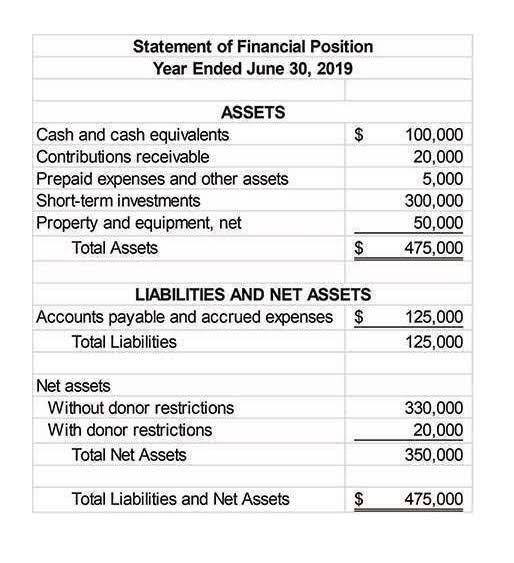
    Also known as the statement of financial position, the balance sheet gives a snapshot of a nonprofit’s financial health. It lists what the organization owns (assets), what it owes (liabilities), and ledger account the difference between the two (net assets). Nonprofit accounting focuses on tracking and reporting the costs of activities that support an organization’s mission and goals. Historically, nonprofits have been easy targets for theft, embezzlement, and misuse of funds. So to protect donors and their donations, the FASB requires nonprofit accounting departments to follow a series of strict internal controls. You may want to hire an experienced nonprofit accounting team to track your restricted funds to keep your donors happy and your funding safe.

    Strengthen your financial foundation with BPM

    how is non profit accounting different

    In addition to knowing how your nonprofit’s financial data is recorded and reported, you should also be familiar with how to use that information to make decisions. Let’s walk through a few accounting best practices that nonprofit professionals should implement. Effective nonprofit financial management also involves duties related to strategy and oversight. These areas are typically covered by your organization’s chief financial officer (CFO) and treasurer, respectively. Having at least four people working on your nonprofit’s finances allows them to delegate responsibilities and check each other’s work, reducing the risk of human error and creating a more efficient system. This tax form is not only necessary for your nonprofit to stay compliant with federal and some states’ regulations, but it can also be key for your fundraising efforts.

    Finding the perfect software for your nonprofit’s finances is a game-changer—it makes managing money easier and gives you the tools to succeed. Failing to closely track expenses leads to overspending, cash flow issues, or potential disruptions to your nonprofit operations. These include administrative, operational, and fundraising expenses—such as staff salaries for support roles, office rent, and donor outreach efforts. Filling the 990 form is an annual requirement for tax-exempt organizations, mandated by the IRS to demonstrate financial accountability. With this statement, your team can pinpoint where funding is coming from and determine if there’s enough cash available to cover expenses on time. The right tools simplify fund tracking, ensure compliance, and give you peace of mind so you can focus on your responsibilities.

    Multiple Revenue Stream Management

    Bookkeeping and accounting are crucial aspects to ensure financial accuracy and transparency. They include the statement of activities, akin to a profit and loss statement, which categorizes revenue and expenses by fund. This approach ensures resources are utilized in line with the organization’s mission. Such transparency is crucial in nonprofit financial statements, offering stakeholders a clear insight into financial priorities and accountability.

    how is non profit accounting different

    Effective Accounting Practices for For-Profit Businesses

    When you understand the unique requirements, you can better perform non-profit organization accounting. A restricted donation comes with requests and restrictions from the benefactor. For example, an individual may donate some money to a university under the condition that it be used to build a new library.

  • Best accounting software

    Becoming a bookkeeper starts with a strong understanding of both finances and organization as well as a love of numbers. They oversee and record all incoming and outgoing transactions, create budgets, balance ledgers and may even manage payroll. It also includes more advanced tasks such as the preparation of yearly statements, required quarterly reporting and tax materials. Accounting takes that information and expands on it through analyzing and interpreting the data. Bookkeeping serves as more of a preliminary function through the straightforward recording and organizing of financial information.

    As a small business owner in St. Louis, Missouri, you have plenty on your plate without the added stress of bookkeeping and taxes. Each month, your bookkeeper organizes your business transactions and prepares financial statements. Get your bookkeeping, income tax prep, and filing done by experts—backed by one powerful platform.From startups to agencies, Bench works with St. Louis small businesses.

    in taxrefunds

    Our software is compliant with European Union General Data Protection Regulation. If you upgrade, a tax expert will do it for you. No matter what plan you use, we give you free human support. Your tax return reviewed and signed by a Tax Professional. Just reliable, professional bookkeeping.

    • When an effective bookkeeping system is in place, businesses have the knowledge and information that allows them to make the best financial decisions.
    • I finally decided to let Geoff do my taxes 2 years ago and wish I had started using them long before.
    • The company’s accountants are knowledgeable in the Research and Experimentation Tax Credit.
    • It serves the accounting needs of clients from different sectors, including healthcare, real estate, sports and entertainment, manufacturing, and construction.
    • A bookkeeping career allows you to develop a foundation in accounting and financial management.
    • As a small business owner, she is passionate about supporting other entrepreneurs and sharing information that will help them thrive.

    We’ve analyzed and rated the best online bookkeeping services to help you make the best decision when choosing the right one. The service you decide to use depends on the needs of your business and may include extra features such as payroll or tax documents. If you don’t feel comfortable with a freelancer, there are many firms that offer bookkeeping services as well. There’s always a demand for experienced, efficient bookkeepers in nearly every industry. If you find that you have a talent for and enjoy the process, you may consider starting your own bookkeeping business providing this service to others. Keeping up with the records in your small business might be a task you are willing and able to tackle yourself.

    The company provides income tax preparation and planning for corporations, partnerships, sole proprietors, estates and trusts, non-profits, and individuals. The team serves clients from a variety of industries, such as education, shared services, real estate, and technology. UHY LLP is a full-service accounting firm that serves clients in St. Louis.

    All-in-one small business tax preparation, filing and year-round income tax advisory Less stress for you, more time to grow your business. Aenten is a provider of back-office services, including bookkeeping, controller services, and CFO services. Aenten is the leading online Accounting & Bookkeeping for small businesses in every industry.

    Simple, straightforward pricing for everything your business needs.

    Start by reaching out to other business owners for recommendations, searching online for providers and checking out reviews on Google or Yelp. If you’re ready to take bookkeeping off your plate and delegate this task to someone else, it can be hard to know where to look. Ask for testimonials from people who have utilized your services in the past and spread the word about your offerings through a website or social media.

    Services

    Your team learns your business patterns and communicates with you consistently, so you always know where things stand. Whether you’re running a startup, a growing LLC, or a freelance operation, we deliver clean, CPA-ready books, fully online and always on time. Reports help you—and your accountant—understand your financial health.

    The Accrual vs Cash Basis of Accounting

    • Simply put, business entities rely on accurate and reliable bookkeeping for both internal and external users.
    • Bookkeeping is the practice of organizing, classifying and maintaining a business’s financial records.
    • Keeping up with the records in your small business might be a task you are willing and able to tackle yourself.
    • I recommend working with this company and Elia if able to request her!
    • Coursera’s editorial team is comprised of highly experienced professional editors, writers, and fact…

    An accountant may interpret the financial records that a bookkeeper compiles in order to assess a company’s financial health. The difference between these types of accounting is based on the timing for when the company actually records a sale (money inflow) or purchase (money outflow) in the books. Without bookkeepers, companies would not be aware of their current financial position, as well as the transactions that occur within the company.

    With Bench, bookkeeping in St. Louis, Missouri, becomes simpler than ever before. Get insights from one central dashboard so you can easily understand the health of your business and make strategic decisions. Our platform allows you to automate data inputs from most major providers to avoid common mistakes.

    First Month Bookkeeping Free!

    Book a demo today to see what running your business is like with Bench. Access or download your updated income statement or balance sheet at all times Upload, manage and access your financial documents swiftly with just a few clicks We Use Quickbooks, Sage, Zohobook, Quicken, Xero and Other. Our services are available on a subscription basis.

    No transaction recordedTransaction recorded through an accounts payable (liability) account Many hire a professional bookkeeper or outsource to a bookkeeping service to ensure accuracy and consistency. Beyond the basics, strong bookkeeping helps avoid costly errors, catch discrepancies early, and simplify year-end tax preparation. Simply put, business entities rely on accurate and reliable bookkeeping for both internal and external users. Accurate bookkeeping is also crucial to external users, which includes investors, financial institutions, or the government — people or organizations that need access to reliable information to make better investments or lending decisions.

    Get timely reminders to stay on top of your financial tasks and deadlines Our team is ready to learn about your business and guide you to the right solution. Not sure where to start or which accounting service fits your needs?

    Proper planning and scheduling is key since staying on top of records on a weekly or monthly basis will provide a clear overview of an organization’s financial health. Bookkeeping tasks provide the records necessary to understand a business’s finances as well as recognize any monetary issues that may need to be addressed. It involves recording transactions and storing financial documentation to manage the overall financial health of an organization. Several career paths can bookkeeping st louis lead to management and analyst positions in the field of accounting.

    Focus on your business and let Aenten handle the accounting operations. We provide one-stop bookkeeping solutions & services that can help your business run better. You’ll be assigned a dedicated financial team, so you’ll only work with someone who is familiar with you, your business, and your financials.

    A chart of accounts is a complete list of all accounts your business uses to categorize money, including assets, liabilities, income, and expenses. Learn about the best certificate programs to prepare for bookkeeper or accounting clerk careers. After becoming familiar with the accounts and software, the role should be relatively straightforward. Bookkeepers don’t need a degree to enter the field, but many employers prefer candidates who have completed college accounting courses or a bookkeeping certificate.

    Our Dedicated team focused on your business. They’ll bring your existing financials up to date and manage your books with accuracy. 80% of our customers agree that aenten save their up to 50% of money on taxes when done with aenten. We can help with the initial setup of your company as well as provide the necessary help to take your business to the next level.

    If you’re unsure about a financial decision or notice inconsistencies in your reports, reach out to a professional before issues snowball. Keeping organized records could have saved them hundreds of dollars. Look for discrepancies like missing transactions or double charges, then fix errors right away. At least once a month, compare your records with bank statements. Following this process keeps your records accurate and prevents overwhelm. Let’s break bookkeeping down into manageable steps.

    Many of the operations are automated in the software, making it easy to get accurate debits and credits entered. Individuals who are successful bookkeeping professionals are highly organized, can balance ledgers accurately, have an eye for detail and are excellent communicators. There are dozens and dozens of bookkeeping options available and the choices may seem overwhelming. If you find someone who is a good fit for your business needs, it doesn’t matter if they are in California while you work from New York. In this day and age, the providers you contract with don’t need to be in the same city, state or even time zone as you.

  • Control Accounts: Simplifying Financial Tracking and Reporting

    Calculate the total of all entries in the Purchases Day Book. While they may provide complete control, they also require more labor. They produce another account that has to be reviewed.

    What is a Control Account in Accounting?

    These types of accounts are most often used by very large organizations that have a significant volume of transactions on a day-to-day basis. It provides a clear overview of your accounts receivable, allowing you to easily track outstanding payments. The debtors summary account manages all money owed to your business by customers.

    Optimizing Financial Accuracy with Control Accounts

    • Control accounts provide a summarized view of financial transactions recorded in subsidiary ledgers.
    • When specific control accounts do not balance, you know that they need to be checked.
    • Recording each individual transaction in the general ledger would be impractical and time-consuming.
    • Control accounts provide summary balances that are sufficient for analysing financial reports.
    • The trade receivable for the period stands at ₹10000 in different debtors’ accounts, and the trade payable at ₹20000 in different creditors’ accounts.
    • These two accounts tend to have numerous transactions in each.

    They would also have an accounts receivable control account that summarises all of the individual customer account balances. These subsidiary accounts typically contain detailed https://tax-tips.org/the-elderly-or-disabled-irs-tax-credit-for-2020-details/ transaction data, while the control account provides an overall view of the total balances. The main use of a control account is to help identify errors that appear in the subsidiary ledgers. The ending balance in a control account should always match the ending total for its subsidiary ledger.

    A control account is a general ledger account containing only summary amounts. If your accounts don’t match, it’s likely that the subsidiary ledger has the error. The subsidiary ledgers are where all the details are located. The term control account refers to any summary account in the general ledger. For instance, if the sum of all customer balances in the subsidiary ledger is £70,000, but the Accounts Receivable Control Account shows £72,000, then there is a discrepancy somewhere that needs investigating.

    The people who would monitor these accounts are called control account managers. The subsidiary accounts can be managed by one person, while the control is managed by another. Because the control account only reviews the end balance, there is less risk of miscalculation. However, the only detail present in the control account is the ending balance. Control accounts are clean entries that match overall amounts in more detailed ledgers.

    This process ensures accuracy and provides a clear overview of your accounts payable, while maintaining detailed records of individual transactions. Creation In the accounts payable subsidiary ledger, create separate accounts for each supplier. Understanding and implementing effective control account practices is crucial for businesses aiming for financial efficiency and transparency. Control accounts are essential for summarizing financial transactions, improving accuracy, and simplifying reconciliation. The inventory control account tracks the value of stock held by a business, ensuring consistency between stock records and financial statements. The purchases ledger control account summarizes total amounts owed to suppliers, making it easier to track and manage payables.

    “There’s no doubt that all the information related to our accounts payable and receivable transactions is incredibly useful for business decisions, but I’m glad we have one  control account to get an overview of how the company is performing.” The ending balance in a control account should be equivalent to the ending total for the subsidiary accounts it includes. In accounting, control accounts are helpful in double-entry bookkeeping systems where each transaction is recorded in two different accounts. This approach emphasizes the master accounts in the general ledger, while the subsidiary ledgers provide supporting details.

    The Role of Control Accounts in Financial Management

    This article explores the definition, purpose, and the elderly or disabled irs tax credit for 2021 details. significance of control accounts in financial management. A control account is a financial summary of the activity of several subsidiary (secondary) accounts so that they appear as one central account in a general ledger. Meanwhile, individual trade debtors and creditors accounts in the subsidiary ledgers are posted without completing the double entry.

    They function as a summary mechanism, consolidating multiple transactions into a single, manageable entry. Recording each individual transaction in the general ledger would be impractical and time-consuming. Consider a business with numerous daily transactions, including sales, purchases, payments, and receipts. Regular updates and reconciliations help maintain accurate financial records, prevent errors, and enhance decision-making. For the past 52 years, Harold Averkamp (CPA, MBA) hasworked as an accounting supervisor, manager, consultant, university instructor, and innovator in teaching accounting online. Control accounts could also be used for accounts payable, equipment, and inventory.

    For example, an accountancy training provider enrolls 20 individual customers and invoices them £2,000 each for the course. The Sales Ledger Control Account is therefore a summary of the total amount owed by all customers collectively. It can also be referred to as an adjustment account or controlling account. Business owners value them for the snapshot they offer of the company’s financial health. By consolidating transactions, they provide a clear overview of financial status while ensuring detailed transaction data remains accessible and organized.

    Control accounts are an essential component of double-entry accounting and constitute the basis of the general ledger. It represents the net total of all the balances in the impersonal account at the end of the particular period. A cost ledger control account is also known as General Ledger Adjustment Account.

    Advantages

    A control account is a summary account in the general ledger. Streamlining the accounting process is a goal for any business seeking efficiency and accuracy in its financial operations. Advanced techniques in control account reconciliation involve a blend of meticulous strategy, technology, and understanding of accounting principles.

    • The control account must also be affected when the personal account is affected.
    • Control accounts are clean entries that match overall amounts in more detailed ledgers.
    • The accounts receivable balance increases as invoices are issued, debiting the control account.
    • A control account is also known as a controlling account.
    • Accounting software facilitates accurate data segmentation by automatically categorising data and creating control accounts and sub-ledgers.
    • If the total of the individual subsidiary ledger balances doesn’t match the balance in the control account, it signals a potential error.

    Posting to Control Accounts: A Step-by-Step Guide

    For auditors, they serve as checkpoints for verifying the accuracy of financial records. It’s a continuous journey towards financial excellence. These reports are vital for audits and financial reviews. This might involve reviewing the transaction flow to pinpoint where the process is breaking down.

    Control accounts help businesses streamline financial reporting, reduce errors, and simplify reconciliation processes. A company can have hundreds or thousands of customers with current accounts receivable balances. Consolidating multiple subsidiary accounts into one control account reduces the amount of time spent on manual data entry, and simplifies tracking transactions across multiple accounts.

    Control accounts are summarised accounts in a general ledger. Knowing some accounting terms will be helpful if you run your small business. Here are some of the disadvantages of such an overhead control account. Master the fundamentals of financial accounting with our Accounting for Financial Analysts Course. Following this procedure helps the management create a control on the ledger posting, which safeguards against the possible chances of misrepresentation and fraud. While they require regular reconciliation and careful maintenance, their benefits in enhancing financial accuracy and decision-making outweigh their challenges.

    Control accounts are a commonly used accounting technique. For more details regarding each of these subjects, you’ll have your subsidiary ledger. They monitor all control account activities. Take a look at some of the reasons to use, and not to use, a control account.

    Taylor is the owner of a medium-sized IT company in San Francisco. In the competitive landscape of modern business, the health and well-being of employees have… For instance, consider a company that has recently expanded its customer base.

    Cash Flow Management: The Lifeblood of Business Success

    A control account is a summarised account that maintains the records of the individual accounts in the ledger, and that is clarified and re-verified regularly. It is not a good idea for the person in charge of your general accounts to also be in charge of your control accounts. Their job is to monitor all activities related to control accounts.